
SEO & search
1,904 articles
Understand search intent, keywords, indexing, rankings and links, and choose SEO priorities that fit your website and market.
 PR
Pogo-sticking describes a user clicking through from search results to a webpage, staying briefly, and then returning to the search results. Bounce rate is…
How Do Mobile Experience, Loading Speed, and Technical Health Affect Search Performance?Mobile experience affects reading and navigation on phones, loading speed affects waiting times and usability, and technical health affects whether search…
Does a mismatch between page content and the URL path affect SEO, and how should the path be named?Does using a service-keyword path such as paintless...repair-near-me for a “Contact Us” page help with SEO? This forum discussion provides no evidence of an…
What should on-page SEO cover? Start with content, tags, links, and user experienceStart on-page SEO by checking that titles and descriptions are clear and content is useful and well structured. Then review whether URLs and image…
How should internal and external links be used in footers and articles?There is no need to avoid links simply because they appear in the footer, or to limit article links to internal pages. Start with their purposes: the footer…
What role do non-semantic formatting tags play in SEO? PR
 PR
 PR
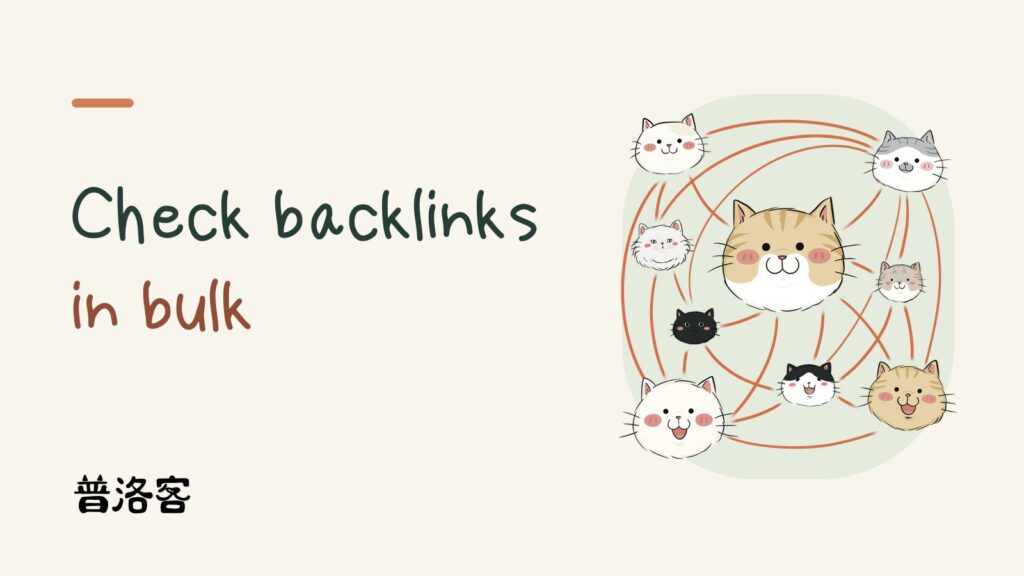
Non-semantic tags are mainly used for styling and layout. They do not, by themselves, clearly describe the role of the content. The sources cited here do…
How can e-commerce websites help search services understand their content?E-commerce websites can help search services find and understand their content through crawlable navigation links, clear URLs, structured data, and sitemaps…
How can e-commerce sites manage links per page while maintaining SEO?E-commerce sites do not need a universal cap on links per page. A more sensible approach is to organize navigation around each page’s purpose, ensure that…
Why should e-commerce businesses care about rich results?E-commerce businesses should care about rich results because they can display product information such as prices, ratings, and availability on search…
How should ecommerce product URLs be structured? Trade-offs between category hierarchies, products, and product variantsEcommerce product URLs should prioritize clear descriptions, a logical structure, and long-term stability . There is no need to remove categories based on…
How Does Disabling Blog Comments Affect SEO and Traffic?Disabling comments alone does not mean rankings will drop, nor does it guarantee that traffic will stay the same. What matters is whether existing content…
Why might keyword rankings suddenly drop sharply, and how should you respond?A sudden, sharp drop in keyword rankings may involve crawling or indexing problems, website changes, manual actions, or algorithm updates. It may also…
How can you place keywords in page elements to improve search visibility? PR
 PR
 PR
Once you have selected your keywords, place the primary keyword naturally in the relevant page’s title tag, H1, and introduction, then add related terms…
Are Meta Keywords Tags Useful, and Do You Need to Fill In the Field?You do not need to fill in the Meta Keywords tag just to improve Google rankings. If you use it to record each page’s target keywords, you can keep it as…
How should developers handle redirects and sitemaps?Developers should first identify which URLs need to change, then redirect old URLs to the corresponding new content and check the sitemap as well. Use 301…
Should multiword keyword domains use hyphens? Ranking evidence is inconclusive, so consider memorability firstFor “docx converter,” the available discussions and articles do not establish whether docx-converter.com or docxconverter.com has a ranking advantage. If…
How does Google handle indexing and search results when important URLs return 4xx errors?When an important URL returns a 4xx error, Google may not remove it from the index immediately. It may temporarily keep the URL indexed so users can still…
Should duplicate URLs use a 301 redirect or canonical, and which version should they point to?Use a 301 redirect to the primary version when duplicate URLs no longer need to be browsed separately. If users still need access to each version, use a…
How do duplicate title tags arise, and how do they affect SEO?Duplicate title tags occur when multiple pages on the same website use exactly the same title-tag text in the HTML head section. Common causes include a CMS…
Does Google penalize duplicate content, and what situations should you watch out for? PR
 PR
 PR
Duplicate content does not mean Google has penalized a site, but it can still affect how the site appears in search results. Articles and forum discussions…
Is duplicate content necessarily deceptive?Not necessarily. Identical or highly similar content does not, on its own, prove deceptive intent. Duplication may simply result from presenting the same…
Does duplicate content include duplication within a site, or also content identical to Wikipedia?It includes both: duplicate content refers not only to duplication across pages on the same website, but also to content that is identical or similar to…
What is the difference between redirect chains and loops, and how do they form?A redirect chain involves multiple consecutive redirects before reaching the destination page ; a redirect loop returns to a previously visited URL,…
What are redirect chains, and why should you address them?A redirect chain occurs when a user or search engine requests a URL and must pass through multiple HTTP redirects before reaching the final page—for…
What does “too many redirects” mean, and what are its causes and effects?“Too many redirects” means that a browser keeps being sent to other URLs without reaching a final page that can load properly. This article focuses on loops…