
SEO & search
1,904 articles
Understand search intent, keywords, indexing, rankings and links, and choose SEO priorities that fit your website and market.
 PR
Avoiding a keyword strategy based only on perceived popularity does not mean excluding popular terms. It means treating “everyone searches for this, so it…
How long does it take to see results from keyword research and optimization?Completing keyword research does not mean rankings have started to improve, and there is no fixed timeline for results after optimization. The available…
What is keyword research used for, and which areas of marketing does it apply to?Keyword research helps you understand how audiences search for products, services, and information. You can then use those insights to plan content, select…
What Is Keyword Research? Assess Search Intent and Competition Before Choosing ToolsKeyword research means identifying and analyzing the search terms your target audience uses. The goal is to decide which terms are worth creating content…
How often should keyword research be updated, and how can you keep it going?Keyword research should be an ongoing process, not something that ends once a website is built. You can start during website development, track search…
Does keyword research still matter for SEO and reaching Google’s first page? PR
 PR
 PR

Yes, but keyword research helps you decide which search needs are worth addressing and what your content should answer—not guarantee a place on Google's…
What can a keyword list be used for?A keyword list can help you review website content, compare target keywords, and plan content, but its uses depend on what the list contains. Website…
How Are Keywords Classified? Understanding Their Marketing Uses Through Search Intent, Specificity, and Brand RelevanceKeywords can be classified in three ways: by search intent, specificity, and whether they include a brand . A single keyword can belong to multiple…
What is keyword optimization, and why is it valuable?Keyword optimization means choosing search terms relevant to a page’s topic and its audience’s needs, then incorporating them naturally into the content,…
What are keywords, and why do they matter?Keywords are words or phrases people enter into search engines to find information; they do not have to be single words. They connect what users are looking…
How does keyword gap analysis differ from content gap analysis?Keyword gap analysis identifies gaps in search terms and rankings; content gap analysis identifies topics and customer questions that have not yet been…
What can keyword tools do, what are their limitations, and how can they support SEO and content planning?Keyword tools can help you find related terms, compare search demand and competition, and identify topics that competitors cover but your site does not.…
 PR
 PR
 PR
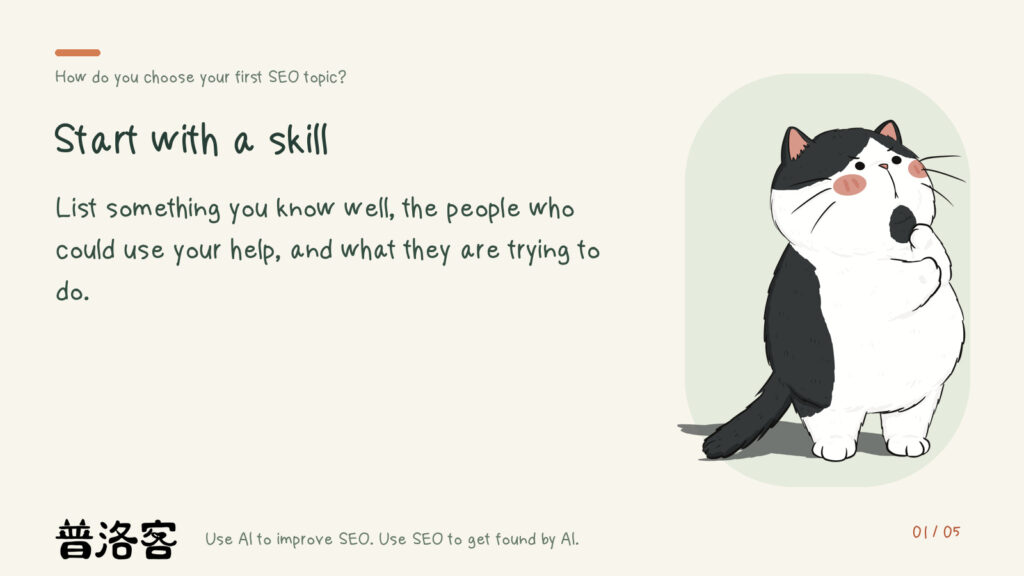 How do you choose your website’s niche, topics, and keywords when starting SEO?
Start with your site’s purpose and the questions you can keep answering well. Then assess the relevant keywords for search demand and competition. Other people’s advice can inform your choice, but trying a topic yourself is how you find out whether it fits.
What is keyword analysis, and what is it used for?Keyword analysis involves identifying and evaluating the words and phrases people enter into search engines to understand what they are looking for and how…
What Are the Benefits and Limitations of Long-Tail Keywords?Long-tail keywords help content address specific needs more precisely. Choosing low-competition terms may also help you rank sooner. However, individual…
How can long-tail keyword strategies be applied across industries?Long-tail keyword strategies should reflect the problem the searcher wants to solve, their stage in the buying journey, and the page’s purpose , rather than…
How do long-tail and short-tail keywords differ, and how do they affect search rankings?Short-tail keywords usually cover broader topics, have higher search volumes, and face more intense competition. Long-tail keywords focus on specific needs…
Why can optimizing for longer phrases also lead to rankings for shorter phrases?A single page can rank for more than one search phrase. When a longer phrase contains a shorter one, and related wording appears in the page content and…
Can pages targeting long-tail keywords outrank large, established websites with fewer backlinks? Possibly—but not through exact wording aloneIt is possible, but not guaranteed. If competitors have genuinely overlooked a specific long-tail query, creating a dedicated, valuable page that addresses…
What data and other factors should you consider when choosing keywords? PR
 PR
 PR
When choosing keywords, first confirm that they align with your business, audience needs, and content goals. Then consider search volume, SEO difficulty,…
Are “How” or “What Is” Suitable Focus Keywords? First, Distinguish Question Words from Complete QuestionsYou can consider complete questions that include a topic , such as “how to design a website” or “what is web design,” as potential focus keywords. These are…
What is voice search optimization, and what benefits and marketing value can it offer?Voice search optimization is part of SEO. It involves adjusting website content, keywords, and technical performance to increase the chances of content…
What Are Semantic Keywords, and How Can They Help Content and SEO?Semantic keywords are terms related to a primary keyword or topic through meaning or context; they are not limited to synonyms. They can help writers…
Why Do Semantic Search and Semantic SEO Matter, and What Are Their Impacts and Applications?Semantic search goes beyond matching words in a query. It tries to understand the user's intent, context, and relationships between concepts to make results…
What is semantic search, how does it work, and how does it differ from keyword search?Semantic search finds relevant content by interpreting a query’s meaning, intent, and context . While keyword search primarily matches words, semantic…